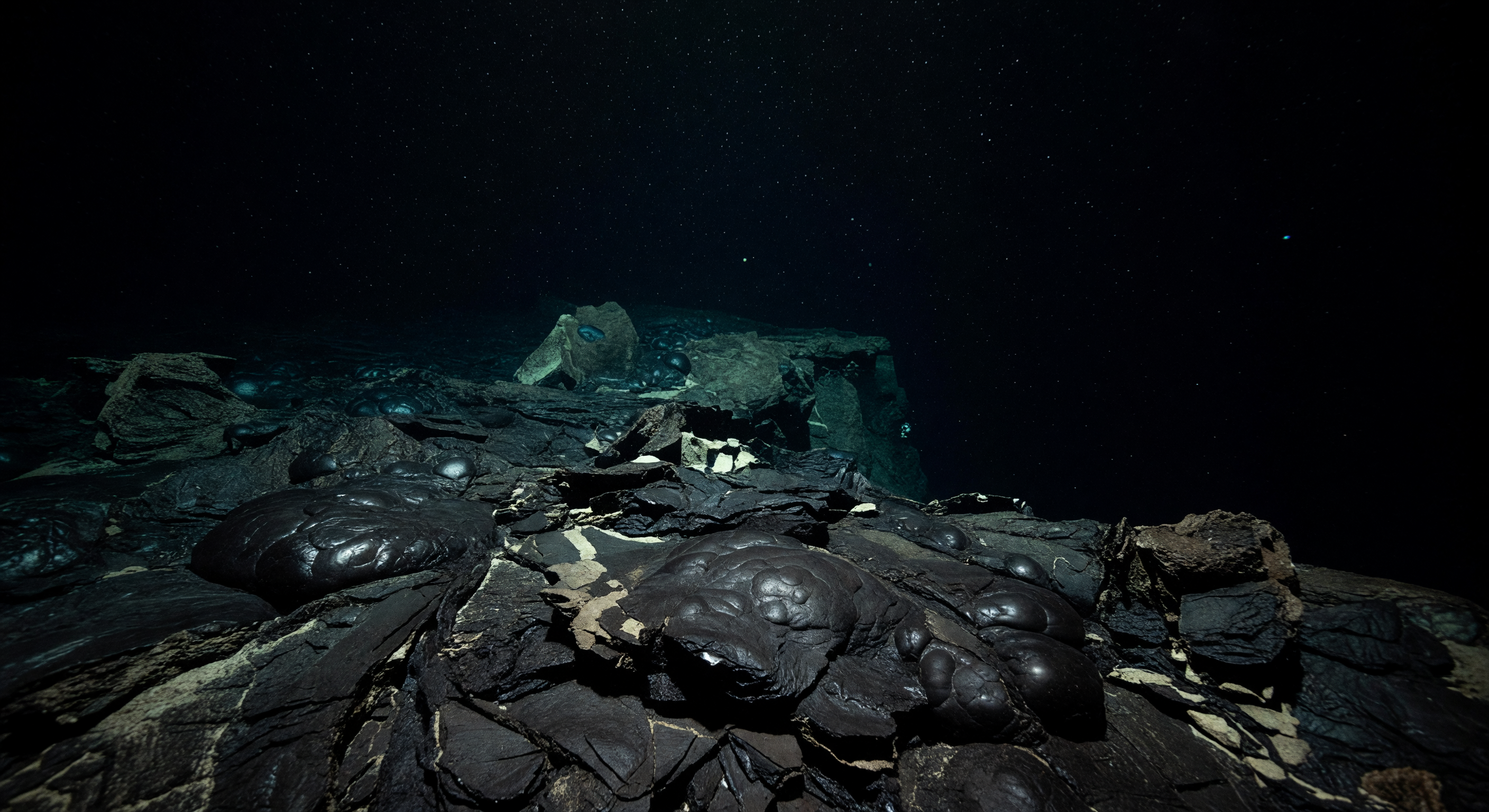
The ROV drifts mere centimeters above a mid-ocean ridge axis where the seafloor is so young it barely exists as geology — bulbous pillow lobes still wear their original volcanic glass like a skin, their surfaces catching the vehicle's cold LED wash with an almost oily metallic sheen, sharp fracture edges casting miniature shadows into collapse cracks that split the crust where the lava drained back into itself. At these depths, somewhere between one and four kilometers beneath the surface, seawater pressure exceeds several hundred atmospheres and the temperature hovers just above freezing, conditions that quench erupting magma almost instantaneously, locking in textures that would take centuries to weather on land. Marine snow — the slow, perpetual rain of organic particles from the sunlit world far above — drifts through the light cone like pale confetti, settling into the finest crevices of the basalt and marking time against surfaces that may have formed only decades ago along the diverging tectonic plates below. Beyond the tight radius of illumination, the ridge skin drops abruptly into an absolute void, and somewhere out in that blackness a cold blue-green pulse flickers and vanishes, the signature of an animal that has never known sunlight and never needed it.
Perpetual night