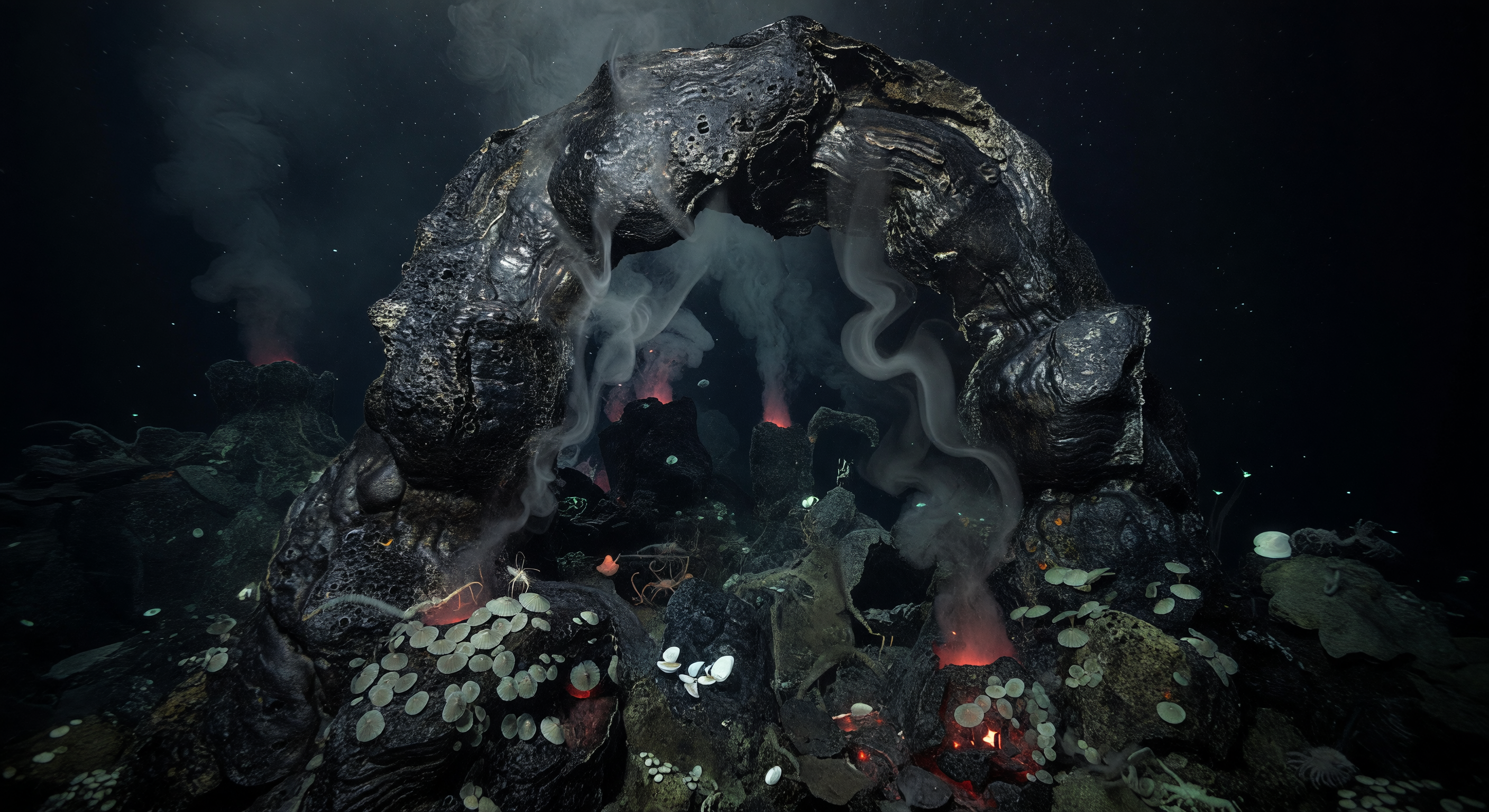
At mid-ocean ridge depths where tectonic plates pull apart and fresh basalt wells up from the mantle, mineral-laden hydrothermal fluid surges through a corroded sulfide archway — a monument built entirely by chemistry, precipitated over decades as superheated water carrying hydrogen sulfide, iron, copper, and zinc met the near-freezing abyssal water column and crystallized into these baroque, laminated structures. Beyond the arch, black smoker chimneys exhale plumes at roughly 350°C, the violent thermal gradient creating shimmering heat distortion as dissolved minerals instantaneously precipitate into dark, billowing clouds that rise and disperse into seawater held near two degrees Celsius under pressures exceeding 300 atmospheres. Dense colonies of pale limpets and Calyptogena clams cling to the shadowed sulfide base, their tissues nourished not by sunlight but by endosymbiotic bacteria that oxidize hydrogen sulfide through chemosynthesis — the same biochemical logic that sustains Riftia pachyptila tube worms and Yeti crabs clustered closer to the active vent effluent, each organism calibrated to exploit a narrow thermal and chemical gradient. A faint chemiluminescent and thermal glow pulses within the plume itself, and sparse bioluminescent points drift through the surrounding darkness like embers scattered in cold water, the only illumination in a world that has never known the sun and does not require it.
Hydrothermal vents