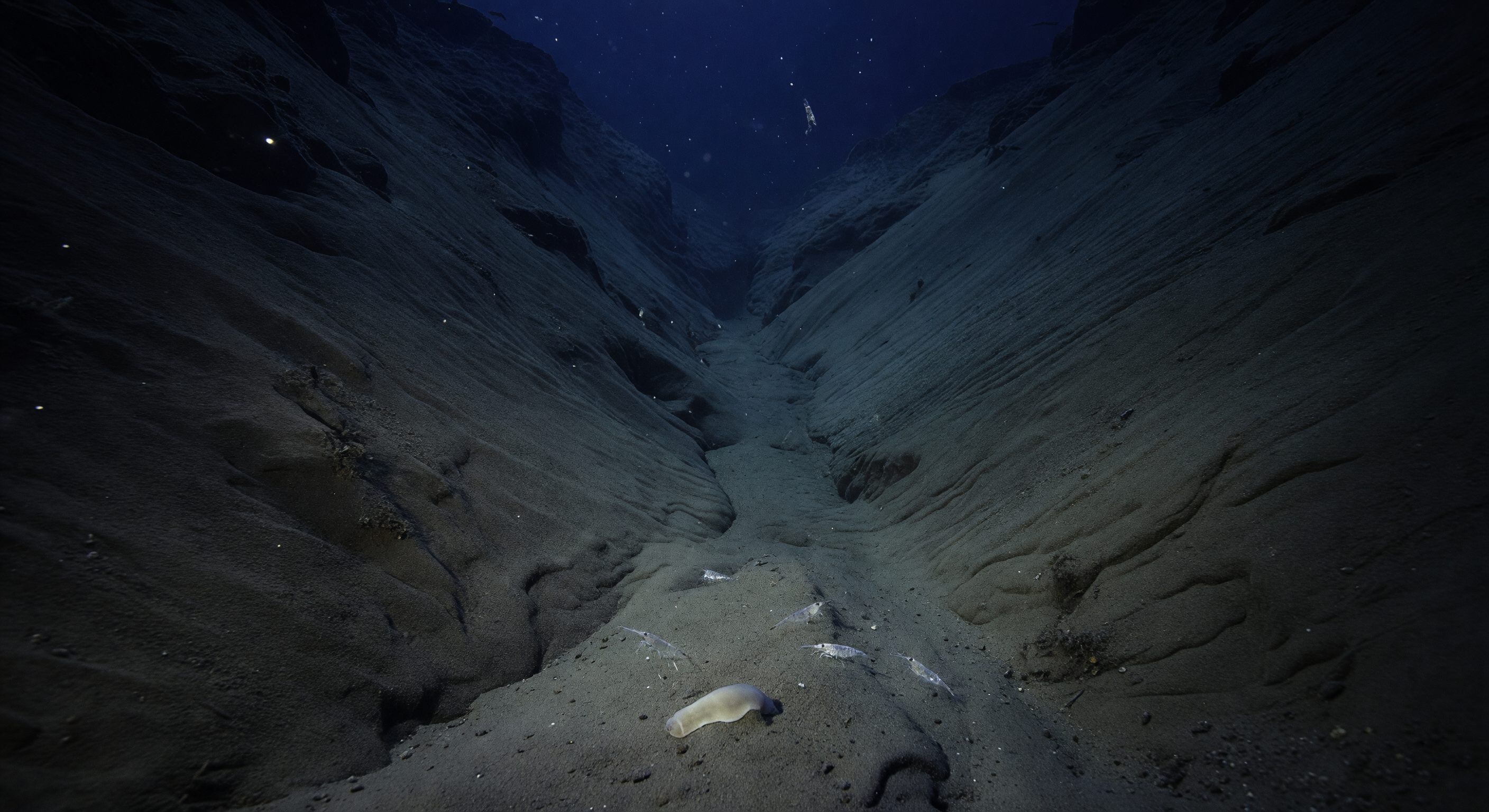
At 910 meters on the continental slope, where pressure exceeds 91 atmospheres and temperatures hover near 4–6°C, a steep sediment chute descends like a narrow geological wound cut into the soft muds of the upper-to-middle slope. This dynamic corridor channels downslope gravity flows and turbidity currents that periodically flush the system, leaving behind fresh slump textures, delicate erosion rills, and a nepheloid layer of resuspended particles drifting in a gentle cross-current just above the seafloor. A small holothurian — a sea cucumber adapted to life at extreme pressure — rests motionlessly on the gray-brown sediment, its soft, translucent body processing the organic detritus that continuously rains down from the sunlit surface far above as marine snow, the principal energy currency of this lightless world. Benthopelagic shrimp, their bodies near-transparent and reflective as glass, hover just above the sediment boundary, occupying the transitional niche between the water column and the benthos that characterizes this mesopelagic-to-bathyal transition zone. The last traces of downwelling blue light from the surface dissolve somewhere far above, leaving only the cold pinpoint bioluminescence of drifting plankton to punctuate the darkness — a world of immense silence, relentless pressure, and continuous slow motion that has persisted entirely without witness.
Continental slope