In the shadowed understory of a temperate kelp forest, tall stipes of *Macrocystis pyrifera* rise from basalt ledges encrusted with pink coralline algae, their gas-filled pneumatocysts buoying a dense canopy overhead where photosynthesis runs at full intensity in water just meters deep. A single luminous oval break in that canopy opens onto blazing cobalt and turquoise above, pure unfiltered solar radiation refracting through the surface and sending wavering caustic patterns across rock, blade, and water column — the signature of shallow epipelagic light where pressure barely exceeds two atmospheres and every photon still carries enough energy to drive primary production. Against this cool shadowed understory, brilliant orange garibaldi (*Hypsypops rubicundus*) — the largest of the Pacific damselfishes and fierce territorial guardians of these reef ledges — hover motionless between the kelp stems, their carotenoid pigmentation evolved not for camouflage but for conspicuous communication in a world still rich with color and light. Fine plankton and suspended particulate drift through the water column, glittering softly in ambient sunlight, each particle a fragment of the immense biological productivity that makes this zone the ocean's engine — a place of oxygen, abundance, and ancient rhythms that proceed entirely without witness.
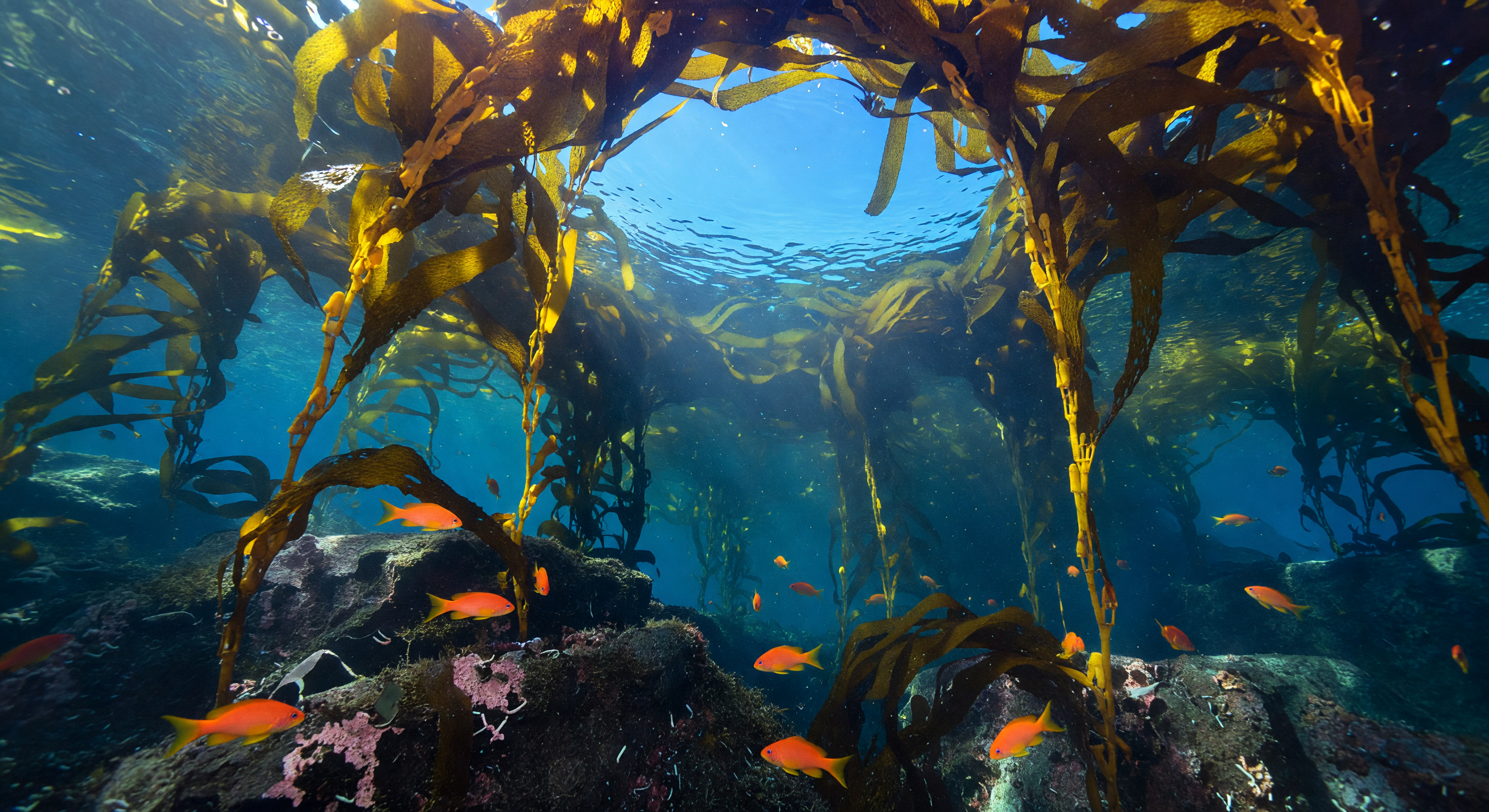
Sunlit surface waters