Kilometres below any reach of sunlight, the axial valley of a mid-ocean ridge opens like a drowned cathedral, its fractured basalt walls rising through the water column in tiers of fault scarps and collapsed lava shelves, all of it utterly dark save for what the earth itself provides. Far above the vent field, a suspended mineral plume drifts beneath the ridge walls like a slow-moving weather system, its layered underside faintly tinged with the orange-red chemiluminescent glow rising from hydrothermal chimneys below — sulfide structures venting superheated fluid laden with iron, manganese, and fine particulate minerals that spread outward in neutrally buoyant hazes for tens of kilometres along the ridge axis. At these pressures, approaching four hundred atmospheres, seawater has circulated deep into fractured young crust, been superheated by magmatic heat, and returned to the water column stripped of oxygen and loaded with reduced chemical compounds that sustain dense microbial communities and the entire chemosynthetic food web anchored to this volcanic spine. Across the vast blackness of the axial valley, isolated flashes of cyan and blue bioluminescence pulse briefly from drifting medusae and siphonophores — each spark lasting only a fraction of a second, yet illuminating enough of the surrounding darkness to suggest the true scale of this space — before vanishing, leaving the plume, the basalt, the shimmering diffuse flow over fresh pillow lava, and the slow rain of marine snow to continue entirely on their own terms.
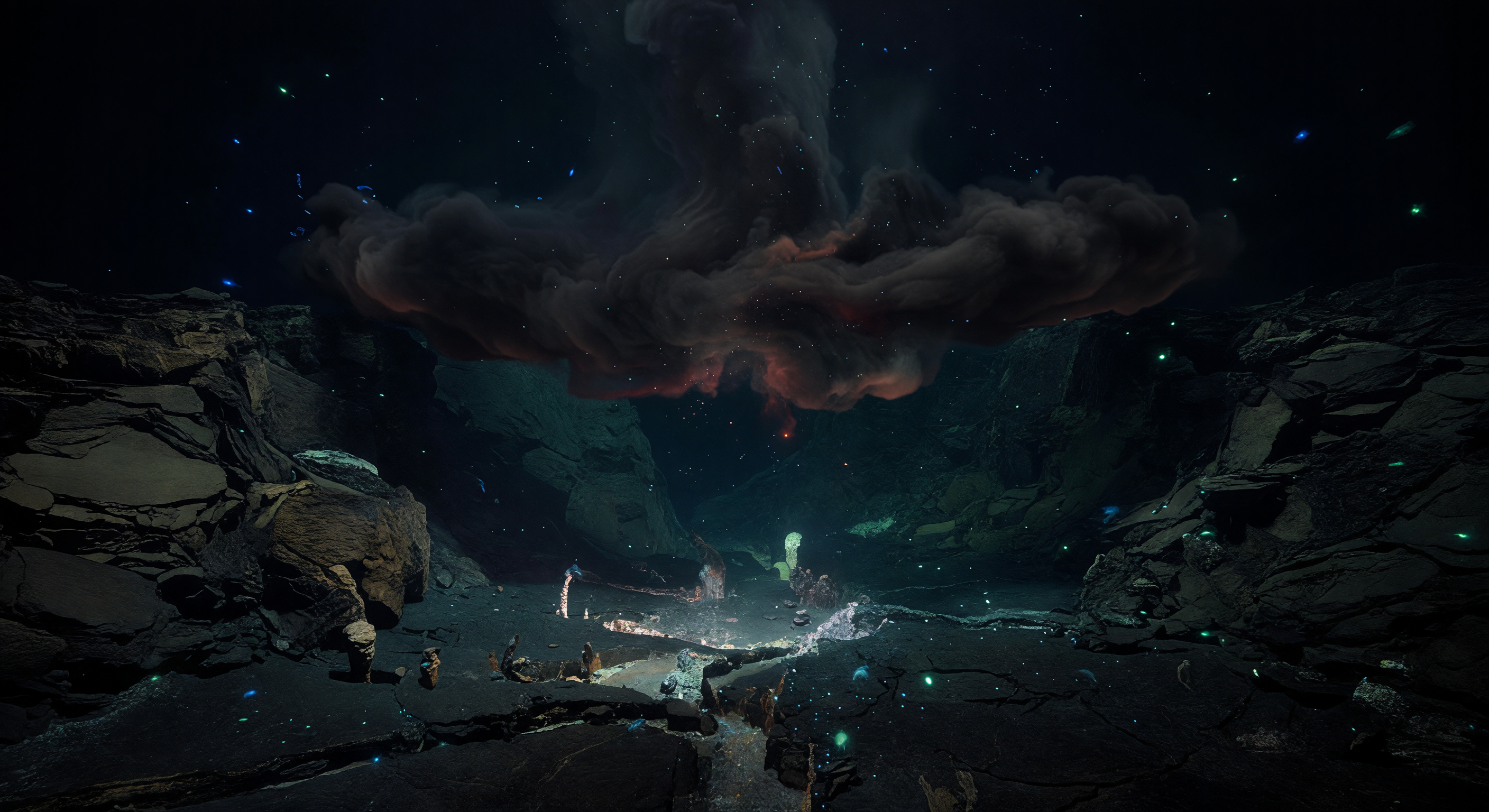
Mid-ocean ridge