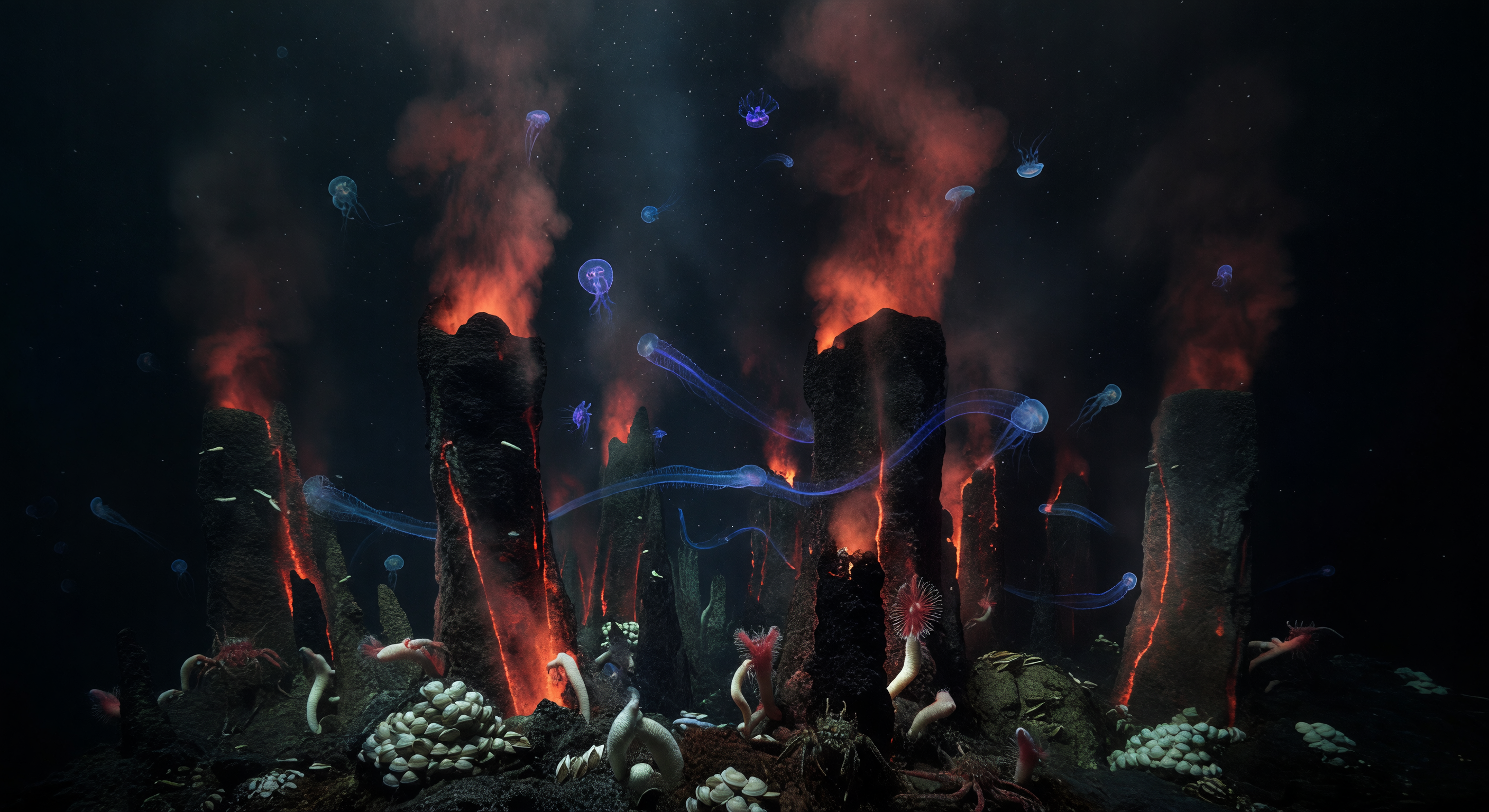
From fissures in fresh basalt along a mid-ocean ridge, superheated water charged with dissolved minerals erupts into the surrounding cold abyss, precipitating towering sulfide spires and black smoker chimneys that rise through pressures exceeding two hundred atmospheres — a world where tectonics and chemistry sustain life in complete sunless isolation. The only illumination here is Earth's own: faint chemiluminescent glows tracing the edges of newly formed mineral crusts, and the living phosphorescence of gelatinous animals drifting above the spire field in the open bathypelagic water column. Comb jellies and medusae pulse through the mineral haze, their bodies nearly transparent, made visible only by the blue, violet, and cyan bioluminescence their own tissues generate — trailing luminescent calligraphy through water that has not known sunlight for millennia. At the base of the chimneys, dense chemosynthetic communities — mats of sulfur-oxidizing bacteria, clusters of Calyptogena clams, pale Riftia tubeworms drawing sulfide directly from the vent flux through their trophosome organs, and slow-moving yeti crabs harvesting microbial films from mineral terraces — testify to an entire food web built on hydrogen sulfide rather than solar energy. Fine marine snow and mineral particles settle in absolute silence through this pressurized darkness, and the spires disappear upward into blackness, primordial and continuous, existing as they have long before any eye was present to perceive them.
Other languages
- Français: Méduses sur flèches sulfurées
- Español: Medusas sobre agujas sulfurosas
- Português: Medusas sobre torres sulfurosas
- Deutsch: Quallen über Sulfid Türmen
- العربية: قناديل فوق أبراج كبريتية
- हिन्दी: सल्फाइड शिखरों पर जेली
- 日本語: 硫化物の塔を舞うクラゲ
- 한국어: 황화물 첨탑 위의 해파리
- Italiano: Meduse sulle torri di solfuro
- Nederlands: Kwallen boven sulfide torens